
.
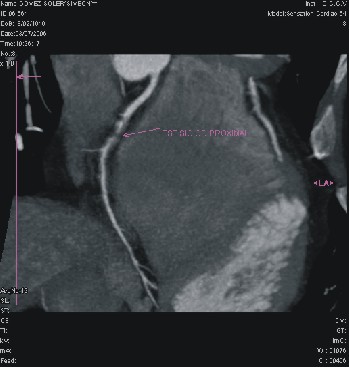
Mais da metade dos pacientes submetidos ao exame de tomografia de coronárias apresentam placa rasa no início da descendente anterior.
.
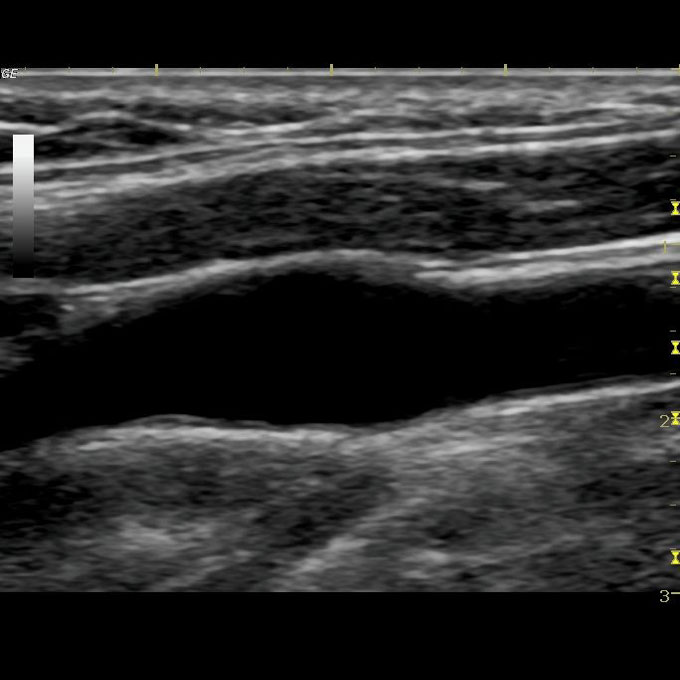
Será que é o mesmo mecanismo que faz com que vários laudos de Carótidas ao US mencionem placa rasa no início da carótida interna?
Aquela curva que faz a carótida interna ao sair do bulbo derruba muitos ultrassonografistas por parecer uma placa!
.
.
Como a tecnologia é nova, não custa perguntar…
Dia: 15 de julho de 2013
Quantitative Analysis of Mitral Valve Morphology in Mitral Valve Prolapse With Real-Time 3-Dimensional Echocardiography
Importance of Annular Saddle Shape in the Pathogenesis of Mitral Regurgitation
.
LINK
Conclusion—Flattening of the annular saddle shape is associated with progressive leaflet billowing and increased frequencies of
chordal rupture and may be important in the pathogenesis of MR in mitral valve prolapse. (Circulation. 2013;127:832-841.)
.
.
Em postagem anterior, destacávamos o mecanismo do anel no prolapso.
.
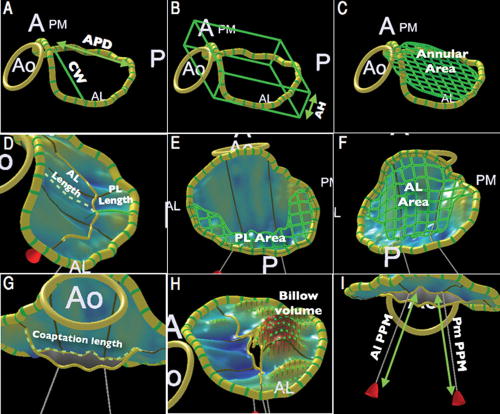
Ao 3D ficou fácil comprovar os achados abaixo:
Compared with the normal and MR− groups, the MR+ group had more dilated mitral annulus (P<0.0001), a reduced annular height to commissural width ratio (AHCWR) (P<0.0001) indicating flattening of annular saddle shape, redundant leaflet surfaces (P<0.0001), greater leaflet billow volume (P<0.0001) and billow height (P<0.0001), longer lengths from papillary muscles to coaptation (P<0.0001), and more frequent chordal rupture (P<0.0001)
.