
.
Aqui artigo
.
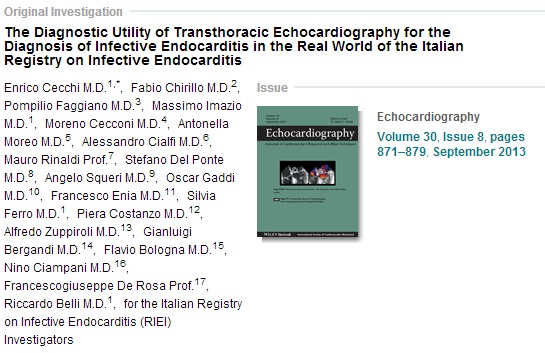
Conclusions: In the real world, TTE is performed earlier and more commonly, and it is the major echocardiographic tool for the initial diagnosis. TEE confirms its superior diagnostic sensitivity in most cases, although it is relatively underused.
.
Mais importante ainda:
.
TTE was mainly responsible for the initial diagnosis in 59%. TEE contributed to changing the therapeutic approach in 42%.
.
Moral da história: Um TT bem feito pode resolver 60% dos casos e não os 40% que todos comentam. Viva o TT.
.
Mês: setembro 2013
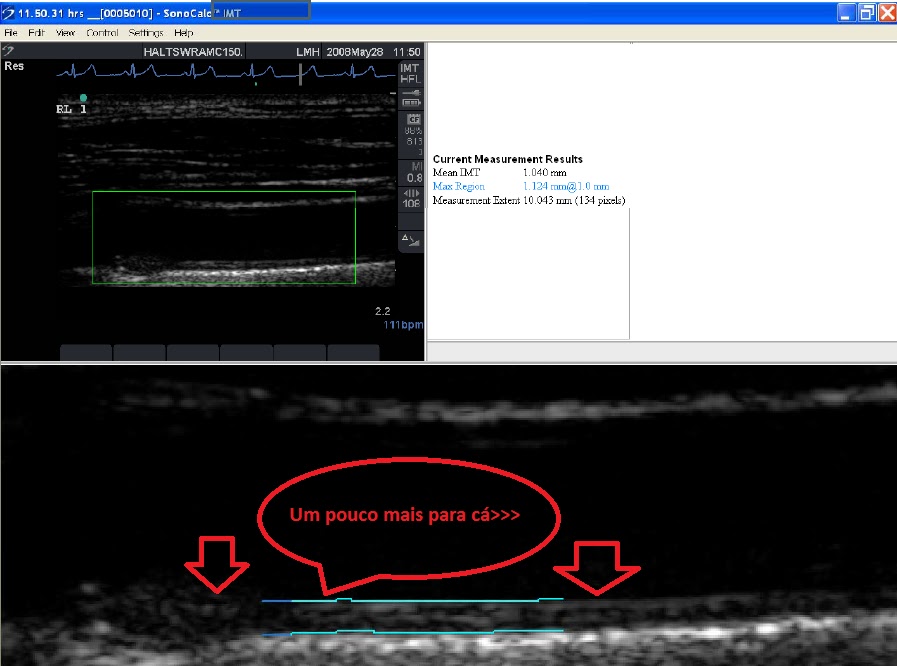
Deu no New England: Medir o IMT da Carótida exige muito cuidado e exclusão do Bulbo.
Aqui artigo completo.
.
Extended-Release Niacin or Ezetimibe and Carotid Intima–Media Thickness
.
Paradoxically, greater reductions in the LDL cholesterol level in association with ezetimibe were significantly associated with an increase in the carotid intima–media thickness (R=–0.31, P<0.001
.
Como explicar aumento da IMT com a redução significativa do LDL?
.
O estudo foi praticamente com um único examinador. Veja a foto:
.
.
Tirem suas conclusões!
.
Deu no New England e comprova: Medida da IMT precisa de rigor.
The mean intima–media thickness of the common carotid artery was measured over a segment of the common carotid artery that was 1 cm long, located approximately 0.5 cm below the carotid-artery bulb, and considered not to contain any plaque
.
Pearson’s correlation coefficient for replicate readings was 0.94 for the mean intima–media thickness of the common carotid artery and 0.76 for the maximum intima–media thickness of the internal carotid artery.
.
Opa! Correlação para a medida máxima não foi tão boa!!! Agora veja a conclusão:
.
Conclusions
The maximum internal and mean common carotid-artery intima–media thicknesses both predict cardiovascular outcomes, but only the maximum intima–media thickness of (and presence of plaque in) the internal carotid artery significantly (albeit modestly) improves the classification of risk of cardiovascular disease in the Framingham Offspring Study cohort.
.
.
Alguns pesquisadores citam esse trabalho e defendem o uso da medida máxima, não usando a média como referência. Aqui nós discordamos dessa orientação. Leia o trabalho e veja se concorda com o blog.
.
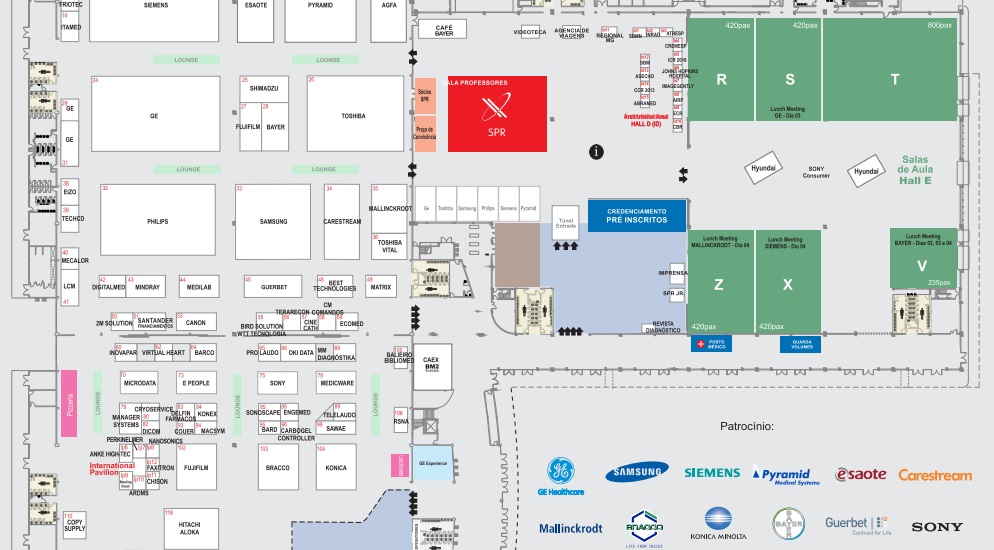
Radiologia vai muito bem, mesmo sem ajuda da ecocardiografia!!!
.
Aqui congresso brasileiro
.
Mas não custa nada usar parte do nosso tempo para elevar os ganhos dos amigos concorrentes na imagem cardíaca…
.
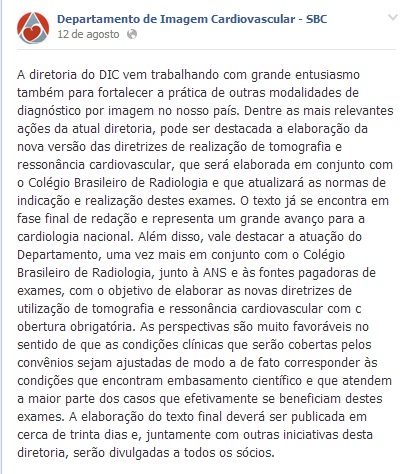
Parabéns DIC! Viva a Tomo e RM!!!
.
O blog também quer ajudar!!! Estamos estudando trocar o nome para
TomoTalk ou ReMaTalk!!! (Brincadeirinha…)
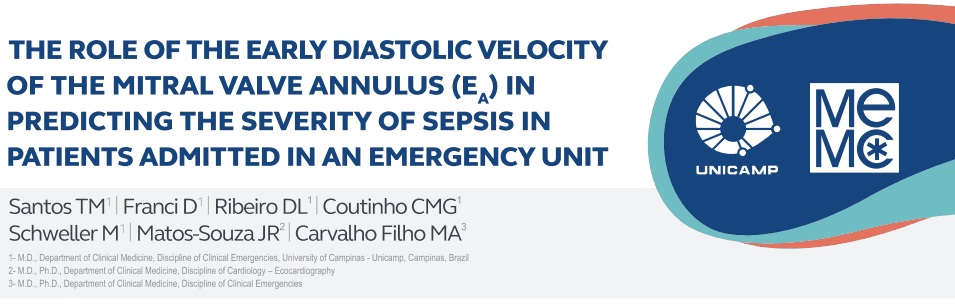
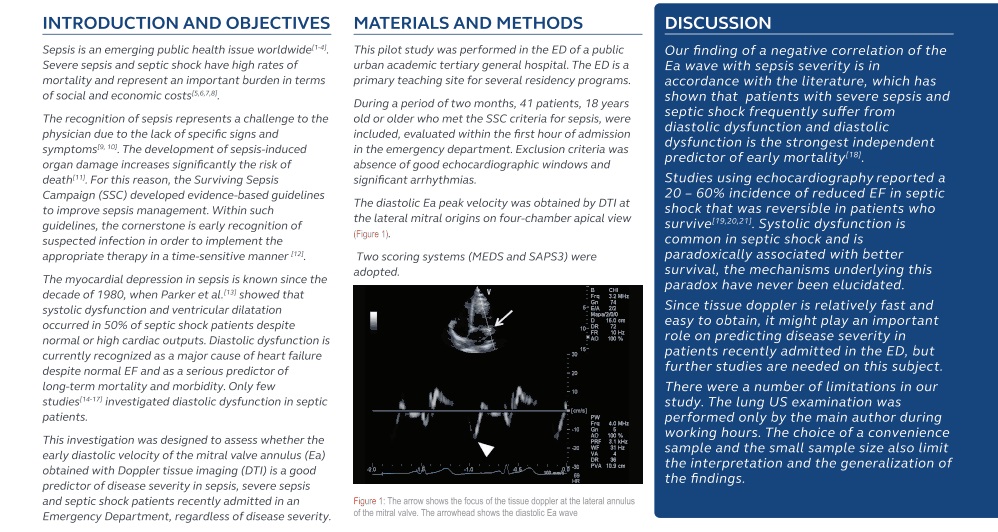
Uma nova era: IMT da Descendente Anterior.
Coronary Artery Wall Thickness of the Left Anterior Descending Artery Using High Resolution Transthoracic Echocardiography – Normal Range of Values
.
.
Aqui completo
.
The maximum axial resolution provided by an 8 MHz transducer is 0.19 mm (assuming 2 cycles per pulse and speed of sound in soft tissue = 1540 m/sec).
.
The measurement of LAD wall thickness, luminal, and EEM diameter is able to be reproduced within and between operators with a high degree of agreement.
.
Results
The LAD was visualized and measured in 227 subjects (94%). The 15 subjects that were unable to have accurate measurement of their LAD due to poor image quality were excluded from analysis. Of the remaining 227 subjects, there were 86 males (38%). Thirty-two subjects (14%) were current smokers and 45 (20%) had a family history of premature CAD. The average age was 46.5 ± 14.5 years and the average BMI was 25.9 ± 4.8 kg/m2.
.
Os Radiocardiologistas criticam o IMT da Carótida por não ser coronária. E agora?
.
Primo pobre, primo rico.
Em 2008 esse blog alertava para a repercussão econômica negativa ou nula da formação do departamento de imagem cardiovascular.
Os primos ricos da tomografia e RM não levariam recursos para o congresso DIC.
.
No último congresso DIC, 5 anos depois, o maior patrocinador do congresso não fabrica tomo e RM do coração!
.
Apesar dos esforços da comissão local, foi evidente que os recursos eram mínimos.
.
Veja aqui a previsão de 2008
.
Será que reverter esse processo não seria uma boa idéia?
Admitir que erramos e cuidarmos só da nossa causa???
.
Nos EUA o Ecocardio continua separado…
Na Europa, a revista de ecocardiografia perdeu valor de citações após virar imagem cardiovascular!
O EUROECHO tem um programa que é 90% ecocardiografia…
.