Estenose aórtica e o Strain longitudinal

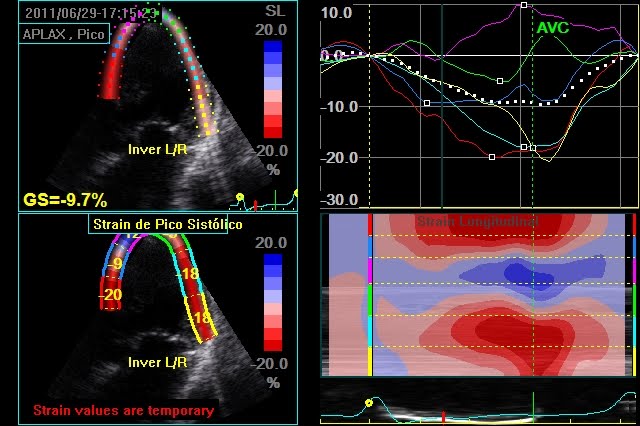
Global longitudinal strain is a strong independent predictor of all-cause mortality in patients with aortic stenosis

.
Conclusions Global Longitudinal Strain (GLS) detects subclinical dysfunction and has incremental prognostic value over traditional risk markers including haemodynamic severity, symptom class, and LVEF in patients with AS. Incorporation of GLS into risk models may improve the identification of the optimal timing for AV replacement.
.
.
.
GLS is predominantly governed by the sub-endocardial layer, therefore it is the most sensitive strain parameter in the presence of myocardial disease.13The middle and subepicardial myocardial layers are concerned with circumferential and twist mechanics and help determine LVEF, however are less susceptible to damage from chronic pressure overload in AS.
.
Vejam como faz sentido o Strain longitudinal ser mais sensível às alterações da estenose aórtica o que o coloca como método de escolha na deformação e dano subclínico.
.

Simplesmente VD.

Right ventricular outflow tract systolic excursion: a novel echocardiographic parameter of right ventricular function

.
.
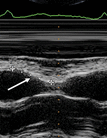
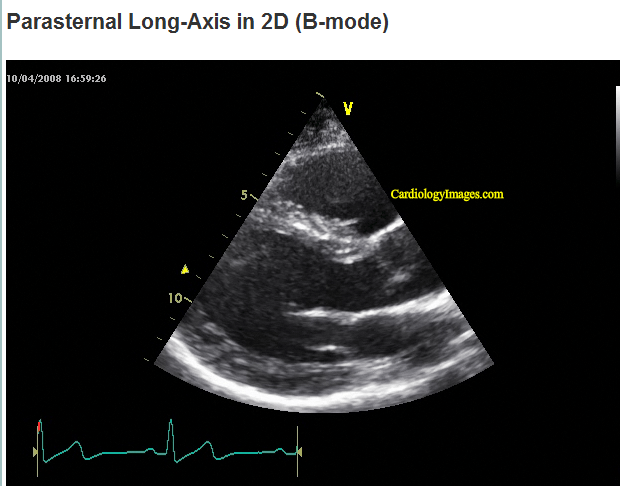
Methods and results RVOT_SE was measured using M-Mode echocardiography from the parasternal short-axis view at the level of the aortic valve, and was defined as the systolic excursion of the RVOT anterior wall.
.
RVOT_SE was 9.6 ± 1.5 mm in the normal RV group and 1.7 ± 1.1 mm in the reduced RV group (P < 0.0001)
.
Conclusion RVOT_SE is a novel, simple, and promising parameter for assessing RV function, and it is associated with poor survival.
.
.
É tão simples que chega a ser engraçado.
Apenas medindo o movimento da parede do VD podemos definir a função.
.
Em um mundo de Strain, 3D e Contraste, a simplicidade vence novamente.
.