AQUI
.
_uacct = “UA-1399567-1”;
urchinTracker();

EuroEcho-Imaging 2013
11 Dec 2013 – 14 Dec 2013 , Istanbul – Turkey
.
Aqui
.
.

.
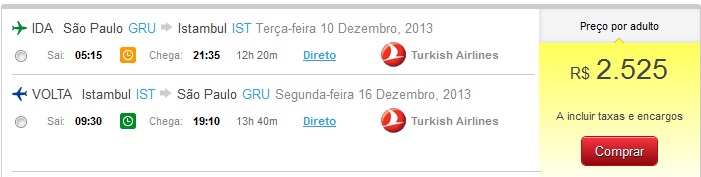
Em Dezembro o blog visitará o melhor congresso de ecocardiografia do mundo para apresentar duas pesquisas realizadas na UNICAMP.
.
Sugerimos ao DIC que realizasse uma excursão de ecocardiografistas para esse congresso no ano passado.
Nem precisava assumir custos, só de agregar trinta a cinquenta pagantes já obteria um belo desconto.
.
Quem gosta do que faz, ecocardiografia, precisa ir pelo menos uma vez na vida ao EUROECHO.
.
Muito mais interessante que o dos EUA. Humano e histórico. E a medicina da Europa é diferente, direcionada ao paciente e uso racional de verbas públicas.
.
Vale a pena!
.
.
Enviado por Ana Feijão.
Carotid artery intima-media thickness, but not coronary artery calcium, predicts coronary vascular resistance in patients evaluated for coronary artery disease
.
AQUI
.
We evaluated 120 patients (mean age 56 ± 9 years, 58 men) without a documented history of CAD in whom obstructive CAD was excluded by means of invasive coronary angiography (ICA) or computed tomography coronary angiography (CTCA). All patients underwent C-IMT measurements, CAC scoring, and vasodilator stress 15O-water PET/CT, during which the coronary flow reserve (CFR) and minimal CVR were analyzed.
.
Multivariable regression analysis revealed that C-IMT (p = 0.03), male gender (p < 0.001), age (p < 0.01), and BMI (p < 0.01) were independently associated with minimal CVR. . C-IMT, but not CAC score, independently predicts minimal CVR in patients with multiple cardiovascular risk factors and suspected of CAD.
.
.
Aqui
.
The clinical and echocardiographic responses to CRT were defined based on clinical improvement (≥1 NYHA class) and LV reverse remodelling (reduction in LV end-systolic volume ≥15%) at 6-month follow-up, respectively.
.
only echocardiographic response to CRT was independently associated with superior survival (hazard ratio: 0.38; 95% CI: 0.27–0.50; P < 0.001).
.
A complete two-dimensional and colour Doppler echocardiographic examination was performed. LV end-diastolic (LVEDV) and LVESV were calculated using Simpson’s biplane method of discs. The LV ejection fraction was calculated and expressed as a percentage.
.
Conclusion In a large population of heart failure patients treated with CRT, the reduction in LV end-systolic volume at the mid-term follow-up demonstrated to be a better predictor of long-term survival than improvement in the clinical status.
.
Frequentemente criticamos a metodologia de Simpson para avaliar vantagens da ressincronização. Aqui usaram o volume sistólico final para encontrar benefício. Ainda aguardamos estudos com 3D e volume verdadeiro para acreditarmos.
Estimation of left atrial blood stasis using diastolic late mitral annular velocity
Eur Heart J Cardiovasc Imaging (2012)
.
Diastolic late mitral annular velocity (a′) measured by transthoracic echocardiography (TTE) is reported to represent left atrial (LA) pump function and the severity of LA remodelling. The purpose of this study is to investigate the association between a′ and LA blood stasis in patients with non-valvular paroxysmal atrial fibrillation.
.
Receiver-operating characteristic curve analysis showed that the best cut-off value of a′ was 7.0 cm/s for the prediction of SEC with a sensitivity of 80%, specificity of 81%, and predictive accuracy of 80%. Multivariate analysis revealed that decreased a′ (OR = 0.61, P = 0.0026) was independently associated with SEC.
.
Conclusion Decreased a′ may be a useful parameter for the estimation of LA blood stasis in patients with paroxysmal atrial fibrillation.
.
.
Um aluno do ecocardiograma da UNICAMP fez prova prática com o Rodrigo em SP. Como sempre, foi muito bem recebido e conduzido. Durante o exame, ele perguntou ao aluno qual seria a utilidade de medir a onda a´?
.
Gostei muito da pergunta, apesar de não saber responder. O estudo acima prova que temos sim, uso racional para a medida da onda tecidual a´.
.

.
O Ecolaudo agora é completo, com assistência técnica e fica na nuvem.
Aqui http://www.amirainfo.com.br/amira_laudos.html
.
.
Diastolic time – frequency relation in the stress echo lab: filling timing and flow at different heart rates
.
Tonino Bombardini1*, Vincenzo Gemignani2, Elisabetta Bianchini2, Lucia Venneri1, Christina Petersen1, Emilio Pasanisi1, Lorenza Pratali1, David Alonso-Rodriguez3, Mascia Pianelli1, Francesco Faita2, Massimo Giannoni2, Giorgio Arpesella4 and Eugenio Picano
.
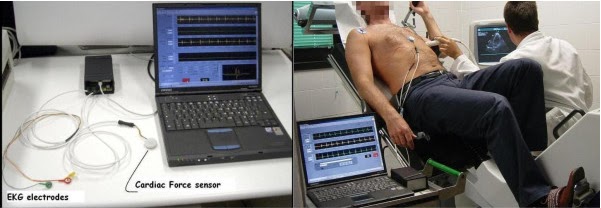
The sensor was fastened in the precordial region by a standard ECG electrode. The acceleration signal was converted into digital and recorded together with ECG signal.
Both systolic and diastolic times were acquired continuously during stress and were displayed by plotting times vs. heart rate. Diastolic filling rate was calculated as echo-measured mitral filling volume/sensor-monitored diastolic time.
.
Diastolic filling rate increased from 101 ± 36 (rest) to 219 ± 92 ml/m2* s-1 at peak stress (p < 0.5 vs. rest). . Conclusion Cardiological systolic and diastolic duration can be monitored during stress by using an acceleration force sensor. Simultaneous calculation of stroke volume allows monitoring diastolic filling rate. Stress-induced "systolic-diastolic mismatch" can be easily quantified and is associated to several cardiac diseases, possibly expanding the spectrum of information obtainable during stress. . . . . . . . . . . . Muito interessante, une conhecimentos de ausculta e física para monitorar o ciclo cardíaco. Como é simples, não deve ser tão caro!
.
Durante aula da EchoTalk colocamos os dois eletrodos no braço direito (Preto e Vermelho) e o amarelo no braço esquerdo.
Funcionou bem demais e poupou o desconforto da presilha no tornozelo.
Agora, ECG em todo mundo!!!