Extra, extra!!! U.S.A descobrem que Adenosina em bolus pode ser útil no diagnóstico de coronariopatia 30 anos depois do Morcerf.

1a

.

http://www.sciencedirect.com/science/article/pii/S0894731715006161

.

Mais um artigo usando um método muito parecido com o descrito por Morcerf há mais de 30 anos e ainda sem o crédito devido.

.

Results

Rate-pressure product after regadenoson was higher in Optison than Definity patients (P = .004). Using a 50% diameter stenosis on quantitative angiography as a reference standard, overall sensitivity, specificity, and accuracy for combined WM and MP analysis were not different for both agents (Optison, 77%, 64%, and 73%; Definity, 80%, 74%, and 78%; P = NS). The sensitivity, specificity, and accuracy of WM analysis alone for Optison were 68%, 71%, and 69% compared with 60%, 72%, and 66% for Definity (P = NS). Adding MP analysis improved the sensitivity and accuracy of Definity for detecting both >50% and >70% stenoses (P < .001 vs WM), while MP analysis did not improve the sensitivity of Optison for detecting either >50 or >70% stenoses.

.

Os resultados não são capazes de animar os ecocardiografistas para um produto de uso complicado no país.

.

A boa e velha água com sal agitada

1a

.

http://onlinelibrary.wiley.com/doi/10.1111/echo.13035/full

.

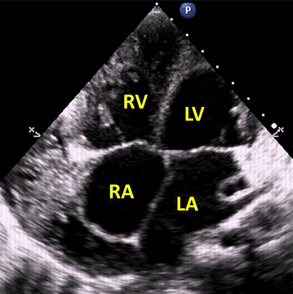
Saline contrast echocardiography (SCE) using agitated saline is an established, simple, inexpensive and yet surprisingly effective diagnostic tool that might help in solving a vexing diagnostic problem. Though the use of SCE is known since 1968, this test is underutilized in clinical practice

.

Air embolism because of injection of agitated saline for SCE is very rare with reported incidence of 0.062% in a multicenter survey. In a recent series, none of the 281 patients had any adverse event. In another study of 132 patients of hereditary hemorrhagic telangiectasia with grade 3 shunt only 2% (three) patients had paresthesia and migraine while none of the patients with shunt less than grade 3 had any adverse event.Further, these episodes are transient with no residual neurologic deficits making SCE a safe diagnostic tool. In our own experience, we have not observed a serious neurological event during the study even in patients with significant right-to-left shunt in more than few 100 patients studied over the years.

.

Confessamos nosso receio com o método mas não podemos negar as evidências científicas de baixíssimo risco.

.

Inclusive usos não rotineiros do método são abordados neste brilhante artigo.

.

1a