.
Nas livrarias online ou amostras aqui.
.
_uacct = “UA-1399567-1”;
urchinTracker();

.
Nas livrarias online ou amostras aqui.
.
.
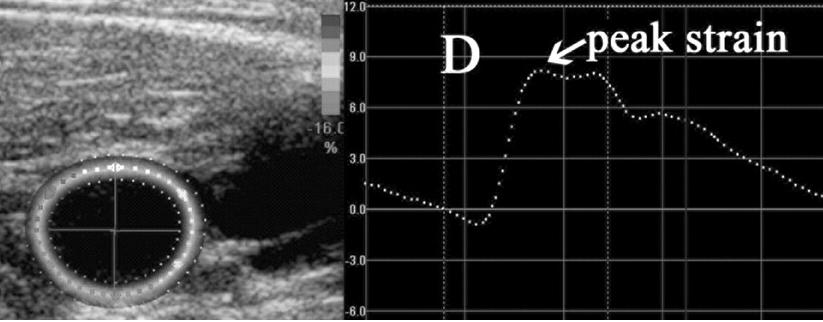
Methods and results Two-dimensional carotid strain, carotid intima–media thickness (CIMT), stiffness index (β), Peterson’s elastic modulus, and distensibility coefficient were evaluated in 47 patients. For all patients, cardiovascular risk scores were calculated. Peak systolic circumferential strain was significantly correlated with conventional indices of arterial stiffness and with the CIMT. Peak systolic circumferential strain adjusted for pulse pressure was the only parameter that showed a significant difference between the three cardiovascular risk groups in which patients were classified. Two-dimensional carotid strain showed an excellent reproducibility.
Conclusion The two-dimensional strain allows the assessment of carotid arterial mechanics.
.
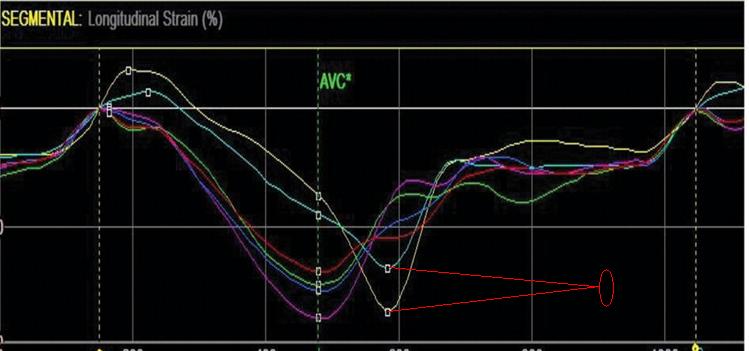
Post-systolic shortening was observed in 32 patients (91%), mean −1.9 ± 1.4%. Mean ΔStrain was −3.3 ± 2.9%. After adjustment for baseline systolic function, PSS (β = 0.77, P= 0.022), and angiographic severity were independent predictors of viability by multiple regression analysis.
.
Conclusions Post-systolic shortening is associated with improved myocardial function after revascularization in patients with acute MI. It predicts long-term systolic function, and provides information on the potential benefit of the procedure.
.
Viabilidade se demonstra ao repouso.
Usando o Strain, ao detectarmos o encurtamento pós sistólico, somos capazes de predizer recuperação do músculo na fase aguda.
.
Mais uma pro Strain, na enxurrada de publicações internacionais que mostram claramente o papel da tecnologia na ecocardiografia de ponta.
.