.
Email para América Latina: Lisette.Carrara@konicaminolta.com
.

.
Email para América Latina: Lisette.Carrara@konicaminolta.com
.
.
http://www.ncbi.nlm.nih.gov/pmc/articles/PMC2794462/
.

.
The improvement in the clinical outcome of patients with low-flow AS will, in large part, come from a better assessment of stenosis severity and a better risk stratification as described above. Furthermore, the optimization of the operative strategies should contribute to reduce the operative mortality in the subset of patients treated surgically. To this effect, several studies recently demonstrated a strong interaction between prosthesis-patient mismatch and depressed LV function with regard to occurrence of heart failure as well as to early and late mortality after AVR. As outlined above, these findings are consistent with the fact that an increased hemodynamic burden is less well tolerated by a poorly functioning ventricle than by a normal ventricle. In light of these recent data, every effort should be made to avoid prosthesis-patient mismatch in the patients with low-flow AS. The clinical implications of these findings are important given that prosthesis-patient mismatch is frequent (20% to 30%) after AVR and, as opposed to other risk factors, it can largely be avoided or its severity can be reduced with the use of a prospective strategy at the time of operation.
.
Fiquei em dúvida se fui eu que não entendi o texto ou foi o Phillipe Piparot.
Mas como ele é canadense, deve estar certo!
.
Philippe Pibarot , Laval Hospital Research Center, 2725 Chemin Sainte-Foy, Quebec, Canada

.
Como dizem muitos artistas ao receberem um prêmio importante, o blog repete aqui:
Não desistam dos seus sonhos!!!
.
O blog sempre sonhou e cobrou uma sociedade participativa e que usasse bem a ferramenta internet.
Parabéns ao novo DIC e ao novo Portal!!!
.
Clinical Significance of Valvulo-Arterial Impedance in Aortic Valve Stenosis (LINK)
.
 .
.

.
Aqui o link para outra ótima fonte.
.
E aqui o melhor uso :
.
Quanto o ventrículo gasta para ejetar o volume que atinge a Aorta?
Essa é a informação de prognóstico que interessa.
.
Como na vida, não importa quanto você têm, mas sim quanto você gasta!
.
.
.
Background—Up to 30% of patients with severe aortic stenosis (SAS; indexed aortic valve area <0.6 cm2/m2) present with low transvalvular gradient despite a normal left ventricular ejection fraction. Presently, there is intense controversy as to the prognostic implications of such findings. Accordingly, the aim of the present work was to compare the natural history of patients with paradoxical low-gradient (PLG) or high-gradient (HG) SAS.
.
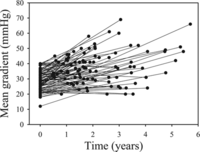
Conclusions—Our study indicates that PLG-SAS is a less malignant form of AS compared with HG-SAS, because their spontaneous outcome is better. We further demonstrated that patients with PLG-SAS are en route toward the more severe HG-SAS form, because the majority of them evolve into HG-SAS over time.
.
Surpresa! Estudo mostra estenose acentuada com baixo gradiente como menos danosa que a com alto gradiente.
.
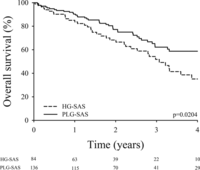
Será que foi por isso?
Between January 1, 2000, and November 30, 2010, 1131 patients with SAS, defined as an AVA <1 cm2, an indexed AVA <0.6 cm2/m2, and a preserved LVEF ≥50%, were enrolled into the registry
AVA was calculated by use of the continuity equation.
.
Ou foi por esse resultado desconexo da evolução?
.
Vale a pena ler o artigo.
Medidas equivocadas em exames supervalorizados levam a resultados inesperados.
Só esqueceram da boa e velha fisiopatologia.
.


.
Na página de ecocardiografia da sociedade canadense existe um tópico logo na primeira visão sobre ecocardiograma com exercício.
Depois , existem cálculos e ajuda para o exame.
.
Mas eles devem estar enganados, são atrasados em ecocardiografia…
.


