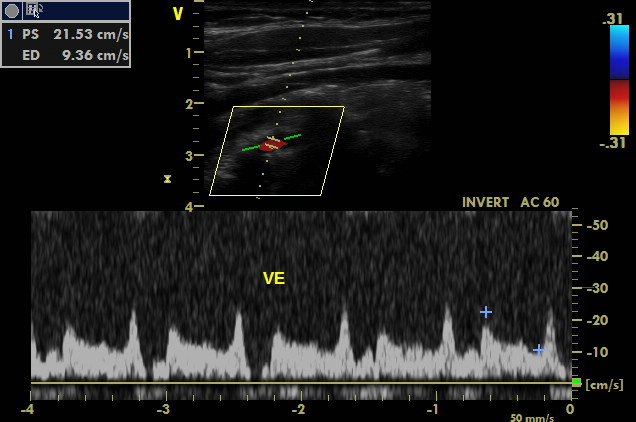
Imagem clássica de Doppler com roubo parcial
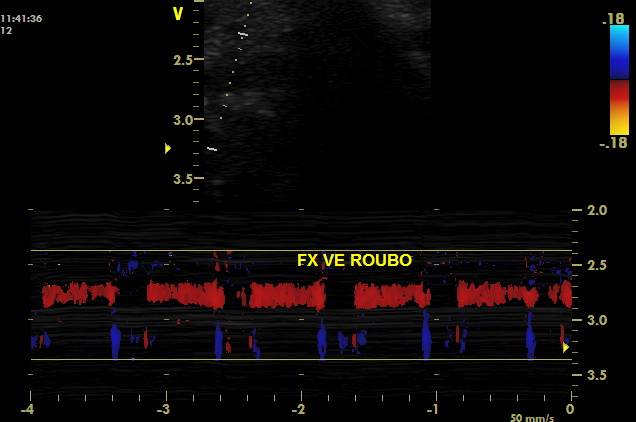 Visão do M Color Doppler do mesmo fenômeno. Notem a interrupção do fluxo no momento do roubo.

Imagem clássica de Doppler com roubo parcial
Visão do M Color Doppler do mesmo fenômeno. Notem a interrupção do fluxo no momento do roubo.
.
http://www.onlinejase.com/article/S0894-7317(14)00217-X/abstract.
.
.
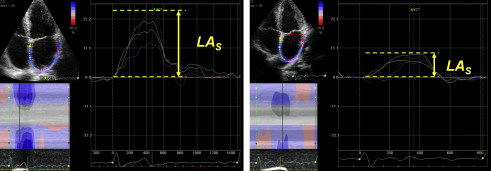
In this observational study, LA strain provided incremental diagnostic information over that provided by the CHA2DS2-VASc score, suggesting that LA strain analysis could improve the current risk stratification of embolism in patients with AF. LA strain can also predict poststroke mortality.
.
Uma conta simples pode ajudar no Escore de CHA2DS2?
Só assim o Strain vai ser útil.
.
Pago mesmo, por enquanto só em algumas cidades do Nordeste.
http://hyper.ahajournals.org/content/61/3/556.full
.
As the main peripheral chemoreceptor, the carotid body senses hypoxia and hypercapnia with resultant hyperventilation, sympathetic activation, and increased arterial pressure. The peripheral chemoreceptor reflex has been found to be enhanced in spontaneously hypertensive rats and hypertensive patients. Carotid sinus denervation (denervation of both carotid body and carotid sinus baroreceptors) prevented the development of hypertension in young prehypertensive spontaneously hypertensive rats and significantly decreased arterial pressure in adult hypertensive spontaneously hypertensive rats. With denervation of the carotid sinus baroreceptors, an increase in arterial pressure might have been expected. However, the aortic baroreceptors were intact, and the arterial pressure decrease supports the view that the peripheral chemoreceptor reflex is hypersensitive in spontaneously hypertensive rats. The decrease in arterial pressure was accompanied by a decrease in sympathetic vasomotor tone (blood pressure response to ganglionic blockade).
.
http://hyper.ahajournals.org/content/61/6/1360.full
.
.
Após o descobrimento dos IECA, o tratamento da hipertensão foi deslocado para o eixo Renina-Angiotensina.
Parecia que o SNC havia abandonado seu papel na hipertensão.
Mas a fisiopatologia apontou sempre o SNC como causador principal da hipertensão “essencial”.
Agora o tratamento voltou para o centro da questão:
Quem mantem o tonus vasoconstrictor nas arteríolas?
Quem mantem a noraepinefrina alta?
.
Na medicina, o que não têm remédio específico fica em segundo plano. Veja o caso do HDL.
Agora que os marcapassos e as intervenções percutâneas agem nos causadores majoritários de hipertensão, tudo pode mudar.
.
Quem faz ecocardiograma está tranquilo. Quanto mais o conhecimento é dinâmico, mais seguro para o método que mais evoluiu em tecnologia.
Que venham os outro métodos! Quero ver quem chega a 150 quadros por segundo!
.
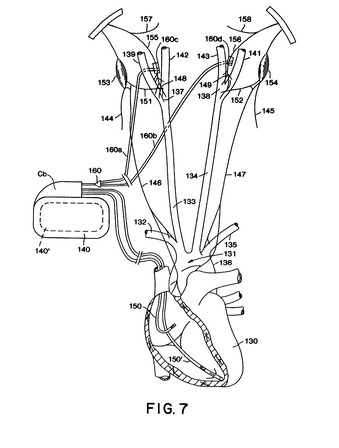
Baroreflex modulation with carotid sinus nerve stimulation for the treatment of heart failure
http://www.google.com/patents/US6073048
.
.
Nas listas de pedidos de patentes americanas ficam as pistas dos caminhos que a medicina tomará.
Surpreende o números de patentes de moduladores periféricos do SNC.
As bases fisiopatológicas existem há muitos anos, como vemos no artigo abaixo.
Conclusions. Cardiac sympathetic activation is present in severe heart failure, bearing a close relation with pulmonary artery pressures, independent of heart failure etiology. Activation of noradrenergic neurons in the brain is also present and may be the underlying central nervous mechanism of the sympathoexcitation observed in heart failure.
http://content.onlinejacc.org/article.aspx?articleid=1119229
.
Quanto mais uma tecnologia dessas avança, mais o ecocardiograma ganha espaço como método ideal para acompanhamento de “moduladores metálicos!”.
.
Veja o estudo em progressão abaixo:
.
Rationale and study design of the NEuroCardiac TherApy foR Heart Failure Study: NECTAR-HF
http://onlinelibrary.wiley.com/doi/10.1002/ejhf.80/abstract
.
.
http://eurheartj.oxfordjournals.org/content/25/17/1550.long
.
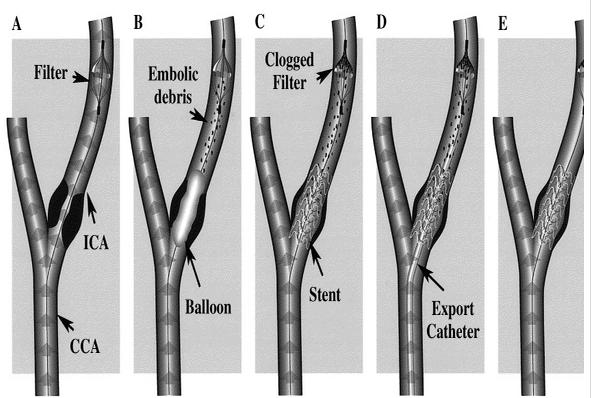
Conclusion Since 1996 there has been a steady increase in the use of PDs for CAS, with a 100% use in 2003. The use of a PD may lower the rate of ipsilateral strokes during CAS.
.
Após dúvidas sobre as vantagens, agora a dúvida é qual proteção usar.
.
.
http://link.springer.com/article/10.1007%2Fs11604-012-0145-9
.
.
http://www.sciencedirect.com/science/article/pii/S0735109705017237
.
.
Nós acreditamos que a cardiologia tem muito a aprender com as carótidas e o uso de filtros na angioplastia coronária ainda vai demonstrar benefício.
.
Que falta faz o contraste de microbolhas intravenoso e intracoronário!
.
.
.
.
.
http://archinte.jamanetwork.com/article.aspx?articleid=1718444
.
.

.
Conclusions and Relevance Although 9 in 10 TTEs were appropriate by 2011 AUC, fewer than 1 in 3 TTEs resulted in an active change in care, nearly half resulted in continuation of current care, and slightly more than 1 in 5 resulted in no change in care. The low rate of active change in care (31.8%) among TTEs mostly classified as appropriate (91.8%) highlights the need for a better method to optimize TTE utilization to use limited health care resources efficiently while providing high-quality care.
.
.
.
Os ecocardiogramas foram bem indicados mas mudaram pouco a conduta. O erro é do método ou é consequência do acerto no raciocínio clínico?
A maioria dos exames diagnósticos servem para CONFIRMAR uma suspeita clínica, então o tratamento já esta praticamente decidido.
A cultura de um exame com resultado surpreendente não ajuda em nada a medicina e o paciente.
.