Cardiopatia Hipertrófica e Ecocardiografia.

2011 ACCF/AHA Guideline for the Diagnosis and
Treatment of Hypertrophic Cardiomyopathy

A Report of the American College of Cardiology Foundation/American
.
Class I

1. A TTE is recommended in the initial evaluation of all patients with suspected HCM.

2. A TTE is recommended as a component of the screening algorithm for family members of patients
with HCM unless the family member is genotype negative in a family with known definitive muta-
tions.

3. Periodic (12 to 18 months) TTE screening is recomended for children of patients with HCM, starting by age 12 years or earlier if a growth spurt or signs
of puberty are evident and/or when there are plans for engaging in intense competitive sports or there is a family history of SCD.

4. Repeat TTE is recommended for the evaluation of patients with HCM with a change in clinical status or new cardiovascular event.

5. A transesophageal echocardiogram (TEE) is recommended for the intraoperative guidance of surgicalmyectomy.

6. TTE or TEE with intracoronary contrast injection of the candidate’s septal perforator(s) is recommended for the intraprocedural guidance of alcohol septal ablation.

7. TTE should be used to evaluate the effects of surgical myectomy or alcohol septal ablation for obstructive HCM.

Class IIa

1. TTE studies performed every 1 to 2 years can be useful in the serial evaluation of symptomatically stable patients with HCM to assess the degree of myocardial hypertrophy, dynamic obstruction, and myocardial function.

2. Exercise TTE can be useful in the detection and quantification of dynamic LVOT obstruction in the absence of resting outflow tract obstruction in patients with HCM.

3. TEE can be useful if TTE is inconclusive for clinicaldecision making about medical therapy and in situations such as planning for myectomy, exclusionof subaortic membrane or mitral regurgitation secondary to structural abnormalities of the mitral valve apparatus,or in assessment for the feasibility of alcohol septal ablation.

4. TTE combined with the injection of an intravenous contrast agent is reasonable if the diagnosis of apical HCM or apical infarction or severity of hypertrophy is in doubt, particularly when other imaging modalities such as CMR are not readily available, not
diagnostic, or are contraindicated.

5. Serial TTE studies are reasonable for clinically unaffected patients who have a first-degree relative with HCM when genetic status is unknown. Such follow-up may be considered every 12 to 18 months for children or adolescents from high-risk families.
.
Diretriz americana reafirma o ecocardiograma como escolha inicial e ampla na doença. Serve para diagnóstico, acompanhamento e planejamento do tratamento.
.

.
Alteração segmentar da contratilida na sua forma pura.


.
Belo exemplo de demonstração de disfunção segmentar.
Que dessa forma, a análise subjetiva, orienta todas as formas de análise semi-quantitativas que dominam a ecocardiografia, hemodinâmica, RM e Tomo.
.
Buscar o valor matemático puro na medicina, acaba com o valor humano que a diferencia.
Quem vê o invisível é o bom médico. (Paracelso)
.

Rio abaixo, rio acima na hipertensão pulmonar

Contribution of Ventricular Diastolic Dysfunction to Pulmonary Hypertension Complicating Chronic Systolic Heart Failure

J Am Coll Cardiol Img, 2011; 4:946-954
.
Results: Criteria were met in 1,541 patients; one-third (n = 533) demonstrating PSP 45 mm Hg (58 ± 10 mm Hg, range 45 to 102 mm Hg). Patients with pulmonary hypertension were older with higher E/e’ ratio, EROA, and lower DT and LVEF. In multivariate analysis, pulmonary hypertension was independently predicted not only by severity of FMR (EROA 20 mm2, odds ratio: 3.8, p < 0.001) but also by parameters of LVDD (E/e' ratio 15, odds ratio: 3.31, p < 0.001; DT 150 ms, odds ratio: 3.8, p < 0.001). Receiver-operating characteristics curve analysis showed that EROA, E/e' ratio, and DT provided significant incremental value in predicting pulmonary hypertension (c-statistic 0.830, p < 0.001).
.
Conclusions: Patients with LVSD commonly have secondary pulmonary hypertension, which is largely determined by the severity of LVDD even with adjustment for FMR and low LVEF. Thus, measures of LVDD in routine clinical practice where PSP may not be estimated are important physiologic descriptors of hemodynamic status and are cumulatively linked in the prediction of pulmonary hypertension.
.
Artigo demonstra correlação clara entre a diástole do VE e o achado de hipertensão pulmonar acentuada.
Editorial valoriza o achado, pois onde há represamento, certamente haverá elevação das pressões.
.

MBA para médicos, estupidificação em massa?

Tenho vários colegas que concluíram os famosos “MBAs” de gestão médica.
Terminado o curso, quase todos eles sentem-se “plena e finalmente” preparados para encarar o mercado…
Além do irritante jargão corporativo que eles insistem em proferir em qualquer rodinha de conversa , sempre com um ar de superioridade e evidente arrogância, percebo uma segurança alucinada e quase delirante de que “agora sim eles sabem o que fazer, vão dominar o mundo seguindo a cartilha do pseudo-mestrado e que todos os outros que não os seguiram nos seus cursos, não passam de idiotas fadados ao fracasso empresarial”.
Pior que isso, eles parecem aprender nesses cursos que a palavra, a honra, o antigo combinado de “fio de bigode” são para os fracos, os perdedores. Não há lugar para isso no competitivo e selvagem mundo corporativo.
Acho que o MBA em sí não é o problema, mas os médicos particularmente parecem ter uma estranha dificuldade em digerir o que nele aprendem…

Diagnóstico: Quanto mais caro, melhor?

.
Como as taxas globais de testes de estresse na população Medicare EUA dobraram de 1993 a 2001, a proporção de testes realizados com cintilografia aumentou de 50% para> 80%. A fração correspondente de testes de estresse realizado com cintilografia no Canadá passou de uma terço a metade. O aumento de quase 3 vezes absoluta nas taxas dos EUA de cintilografia sugere que esses estudos de imagem se tornaram o padrão da prática clínica sem evidência clara para sustentar o seu uso rotineiro em lugar de testes de exercício, sem cintilografia.
(Google Tradutor)
.
Rising Rates of Cardiac Procedures in the United States and Canada
Too Much of a Good Thing?
John Z. Ayanian, MD, MPP
.
Circulation.
2006; 113: 333-335

.
ou.
.
Apesar do aumento das taxas de teste e tratamento poder ter alguns benefícios que não fomos capazes de examinar, particularmente com respeito ao alívio dos sintomas, o que não podemos medir, acreditamos que nossos resultados levantam a questão do valor desses aumentos dramáticos. Embora os testes de estresse em si são muito baixo risco e de custo relativamente baixo procedimentos, testes de diagnóstico aplicada a populações de baixo risco são susceptíveis de identificar a doença ou pseudo-doença subclínica. Cateterismo cardíaco e revascularização não são sem risco e são bastante caros. Quanto maior a taxa, especialmente na ausência de um aumento na prevalência da doença e sem seleção cuidadosa do paciente, o mais provável é que um grande número de pacientes com indicações borderline será exposto a esse risco e custo.
(Google tradutor)
.
Temporal Trends in the Utilization of Diagnostic Testing and Treatments for Cardiovascular Disease in the United States, 1993–2001
F.L. Lucas, PhD; Michael A. DeLorenzo, PhD; Andrea E. Siewers, MPH; David E. Wennberg, MD, MPH
.
Circulation.
2006; 113: 374-379

.
Dezenas de artigos e centenas de autores no mundo afirmam o mesmo:
Sem evidências de benefícios clínicos, as tecnologias de alto custo podem fazer mais mal do que bem.

.
Nenhuma entidade sem fins lucrativos e representante da cardiologia geral deveria privilegiar aulas de métodos diagnósticos caros sem benefícios comprovados para o paciente.
Ao fazer isso, ensina o cardiologista clínico de maneira equivocada e perde seu papel na sociedade.

.
.

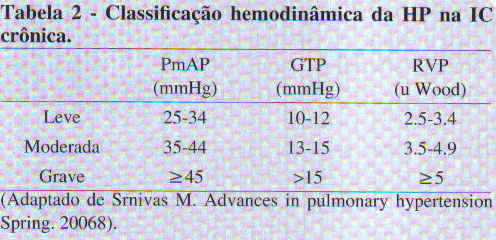
Hipertensão Pulmonar em números!

Interessante revisão de Hipertensão Pulmonar na ultima publicação revista da Socesp (Volume 21 – nº3).
Coloca valores de referência, revisa as possibilidades terapêuticas e diagnósticas, colocando o Ecocardiograma (merecidamente) em destaque.
Vale a pena ler na íntegra , logo estará disponível para todos em PDF no site da Sociedade (www.socesp.org.br).

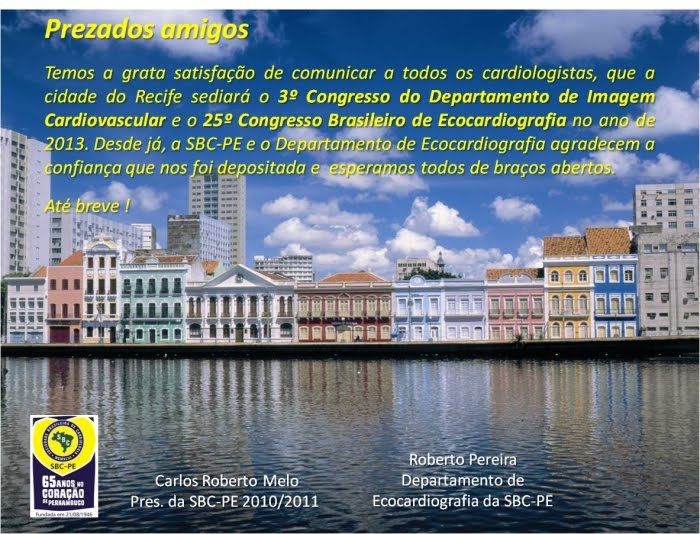
Parabéns, Recife! .

.
Enquanto a votação no blog da importância do congresso DIC surpreende ao lado, somos informados que em 2013 será em Prenanbuco.
.
Parabéns aos organizadores e especialmente ao Prof. Castilho pelo empenho na campanha.
Será uma grande realização, temos certeza.
.

Regurgitação aórtica: Como classificar.

.
Aqui.
.
Comparison of Semiquantitative and Quantitative Assessment of Severity of Aortic Regurgitation: Clinical Implications
.
The mean effective regurgitant orifice area was 25 ± 14 mm2 (range, 3–69 mm2), the mean regurgitant volume was 57 ± 31 mL (range, 9–183 mL), and 100 patients (44%) had severe AR (effective regurgitant orifice area ≥ 30 mm2 or regurgitant volume ≥ 60 mL). Overall, semiquantitative methods had good specificity but poor sensitivity, except the vena contracta, which had good sensitivity and specificity. Sensitivity, specificity, and positive and negative predictive values of the recommended thresholds for severe AR of the four semiquantitative methods were 53%, 89%, 77%, and 73% for left ventricular cardiac output ≥ 10 L/min; 12%, 100%, 100%, and 52% for pressure half-time < 200 msec; 45%, 87%, 79%, and 60% for diastolic flow reversal ≥ 18 cm/sec; and 81%, 83%, 78%, and 85% for vena contracta ≥ 6 mm, respectively. Conclusions For the assessment of AR severity, current thresholds appear specific but poorly sensitive, except for vena contracta, which provides good discriminative value. Semiquantitative methods should be integrated into the comprehensive evaluation of AR severity, but severe AR should not be excluded only on the basis of semiquantitative criteria. These results emphasize the need for the quantitative assessment of AR severity. . Apesar das críticas, o artigo mostra a Vena Contracta como excelente ferramenta para avaliação da regurgitação aórtica.
.
É claro que o uso do PISA e os valores “quantitativos” podem ser mais específicos mas uma análise de insuficiência aórtica moderada ou acentuada envolve avaliações também do volume ventricular, refluxo na aorta descendente e abdominal e área do color na via de saída, pelo menos, em adição aos parâmetros semiquantitativos utilizados.

.

Imagem é tudo. Mas comprovação clínica não se advinha.

.
CMR imaging is emerging as a versatile diagnostic tool for the management of the patient with suspected or established ACS. It provides additional information over other clinical tests for the detection, differential diagnosis, and prognostication after ACS owing to the high spatial definition and multimodal data it provides. Future larger studies will determine more fully the role of CMR in the setting of ACS.
.
Division of Imaging Sciences (T.L., E.N., S.P.) and Cardiovascular Division (T.L., S.R.), The Rayne Institute, KCL, St Thomas’ Campus, London, and Division of Cardiovascular and Neuronal Remodelling, University of Leeds, Leeds (S.P.), UK.
.
Circulation.
2009; 119: 1671-1681

.